Booking choice: The glowworm caves tour, from $73 per person. Check dates Tour details
New Zealand's glowworm is Arachnocampa luminosa, the larva of a fungus gnat. Māori call it titiwai, "lights reflected in water". It lives in caves, old mining tunnels and damp forest banks all over the country, and nowhere else on Earth.
The facts below come from Te Ara, the Encyclopedia of New Zealand, the Science Learning Hub and cave researchers. Where the tour operators' version differs, we say so.
The quick answer
Glowworms are fly larvae, not worms, and the New Zealand species lives only here. The light is a chemical reaction in modified excretory organs; the poo doesn't glow. Don't touch them: they retreat and dim. They don't bite people. In caves they glow day and night, all year. Outdoors they light up shortly after dark.
What is a glowworm?
The larva of a fungus gnat, Arachnocampa luminosa. It spends most of its life as a glowing larva and only a few days as an adult fly.
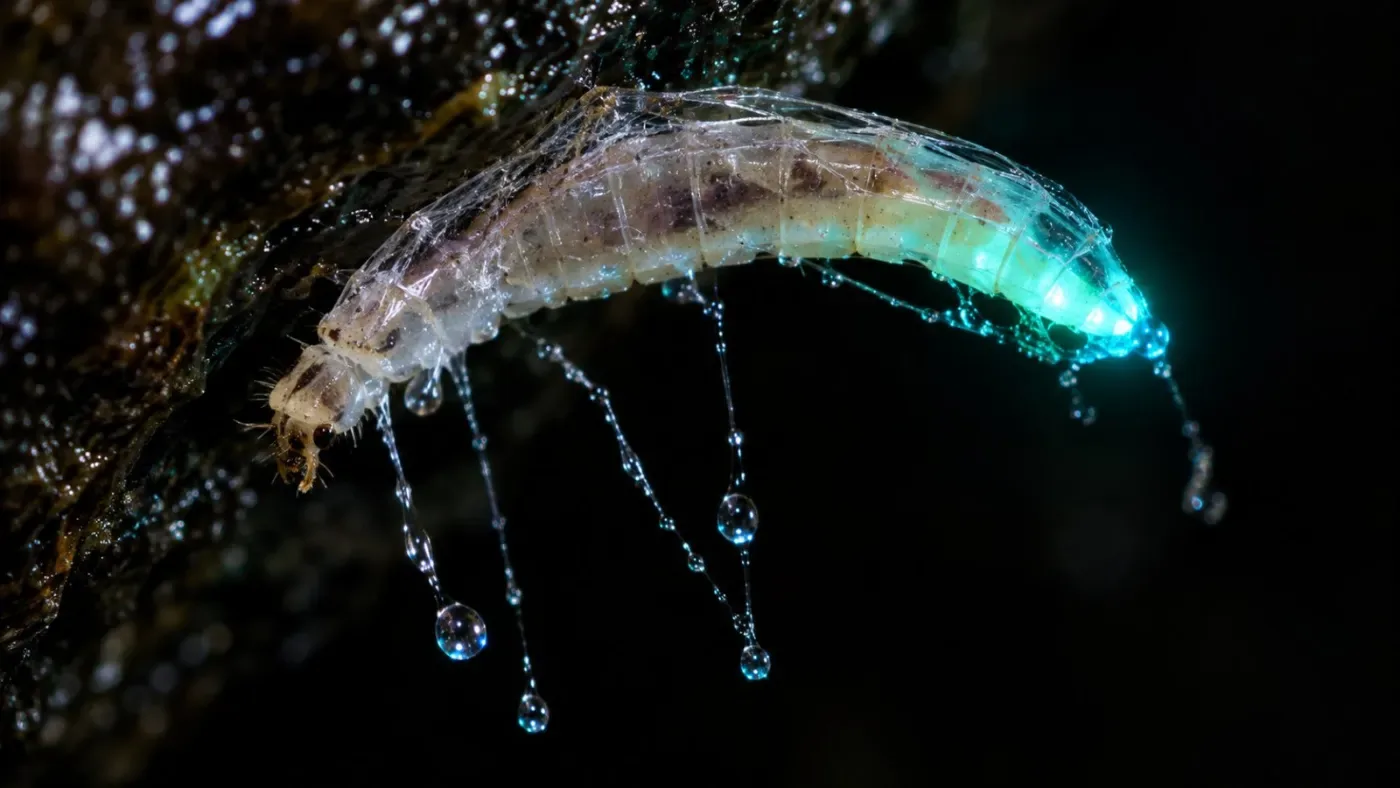
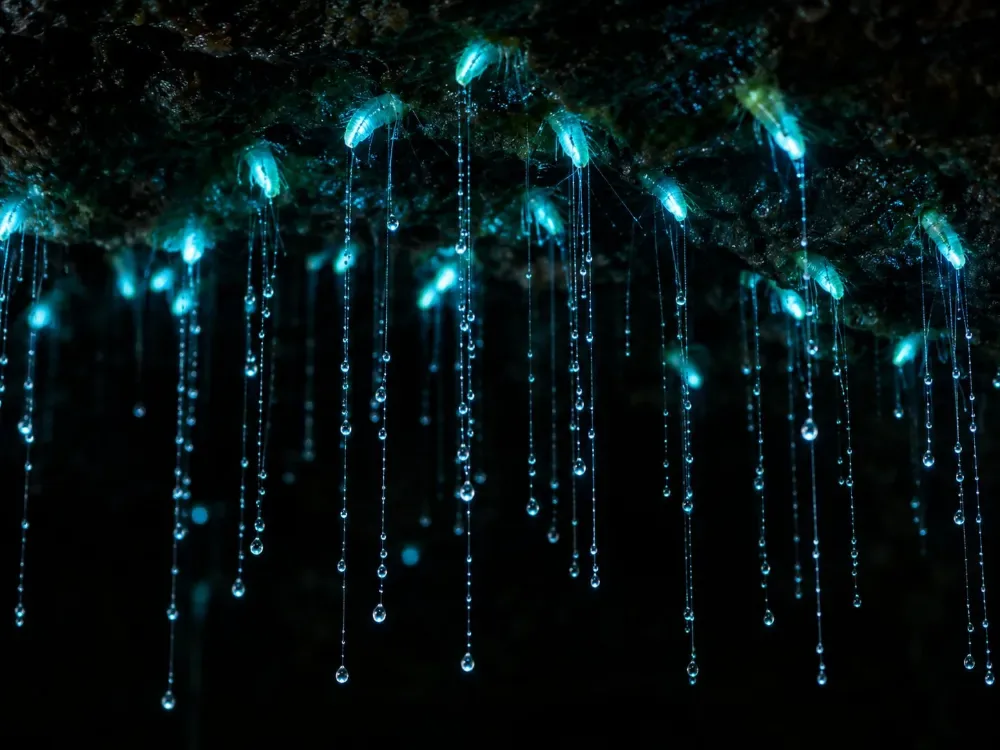
Despite the name, it is not a worm and not a beetle. The larva lives in a tube of silk and mucus on a damp ceiling or bank, and lets down dozens of sticky threads. Midges and other small flying insects are drawn to the light, get stuck, and are reeled in and eaten (Te Ara).
The species is endemic to New Zealand, on both main islands. Australia has eight other species of the same genus, which is why some tourism pages say "New Zealand and Australia" (Arachnocampa). The New Zealand glowworm is found only here.
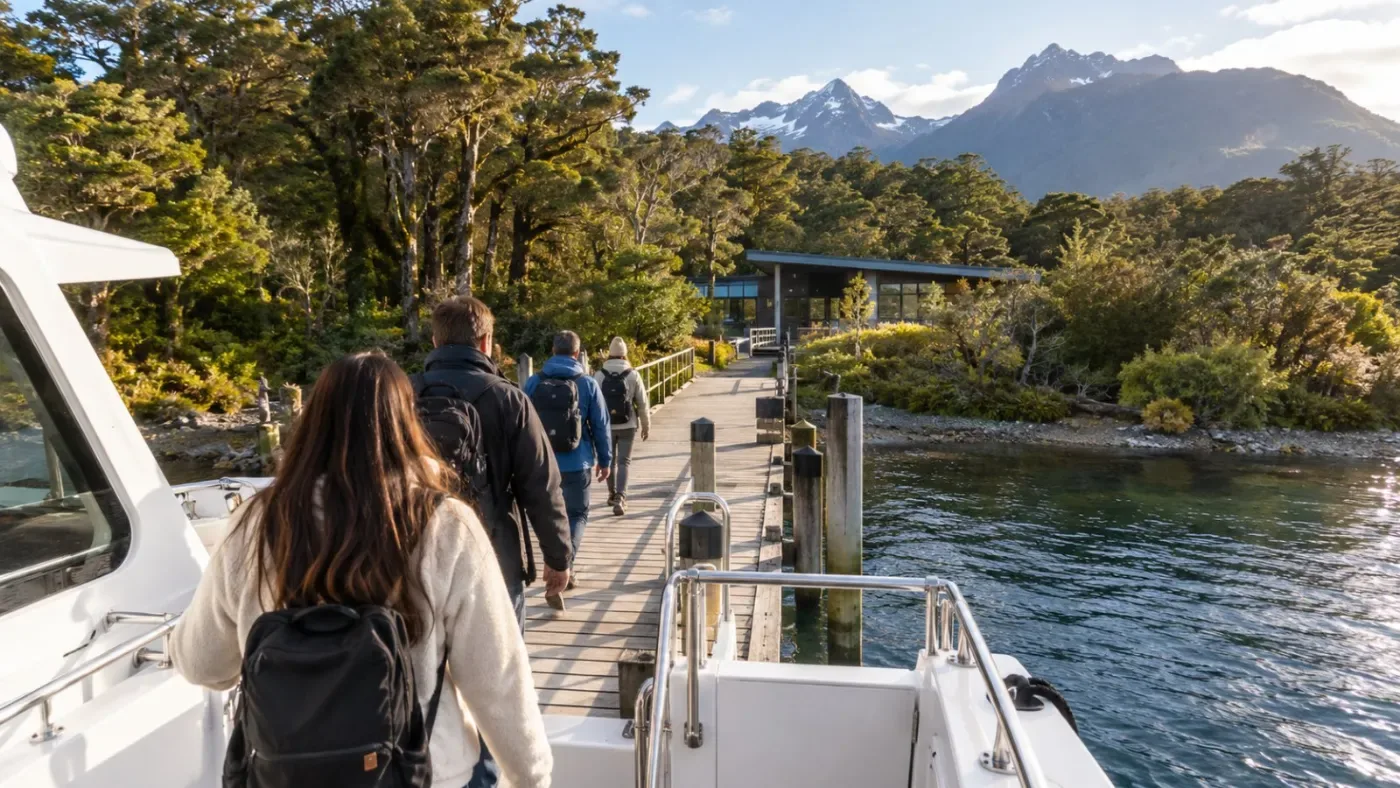
See a cave ceiling of titiwai by small boat, 30 minutes across the lake from Te Anau.
Check dates for the glowworm caves tourHow do glowworms glow?
A chemical reaction: the enzyme luciferase oxidises luciferin, using oxygen and the cell's energy supply. It happens in the tips of the larva's excretory tubules.
The light organ sits at the tail end, in the swollen tips of the Malpighian tubules, the insect's version of kidneys. An air sac around it supplies oxygen and works as a reflector (Te Ara). Tourism New Zealand says about 90% of the reaction's energy becomes light (newzealand.com).
The larva is the brightest stage. Pupae glow faintly; adults glow too, but less. Guides on the Te Anau tour will tell you a hungry larva glows brighter to pull in more food, a claim repeated by RealNZ.
Does glowworm poo glow?
No. Glowworms do produce droppings, but the poo doesn't glow. The myth comes from the light organ sitting at the end of the excretory system.
Cave biologist Dr Claire Baker tested it with filter paper: the faeces are a tiny black smudge, dropped outside the snare, and they don't pass through the light organ (Chandler and Baker, ACKMA Journal). Researcher David Merritt traces the myth to a 1990 book that described the light as made from metabolic waste.
The light cells only happen to sit at the tips of the excretory tubules. They work separately from the cells that handle waste. Some guides still tell the poo story because it gets a laugh. Now you know.
Can you touch glow worms?
You shouldn't. A larva that is touched, or whose threads are disturbed, retreats into its tube and stops glowing.
Human interference is the biggest threat glowworms face (Arachnocampa). Touching breaks the threads they need to eat, and every new thread costs the larva time and energy. In the Te Anau cave the grotto is reached by boat, out of reach, so the question doesn't arise.
A popular belief is that glowworms switch off the moment you shine a torch at them. They can't: dimming takes several minutes. A light that vanishes suddenly means the larva has slid into a crevice (Science Learning Hub).
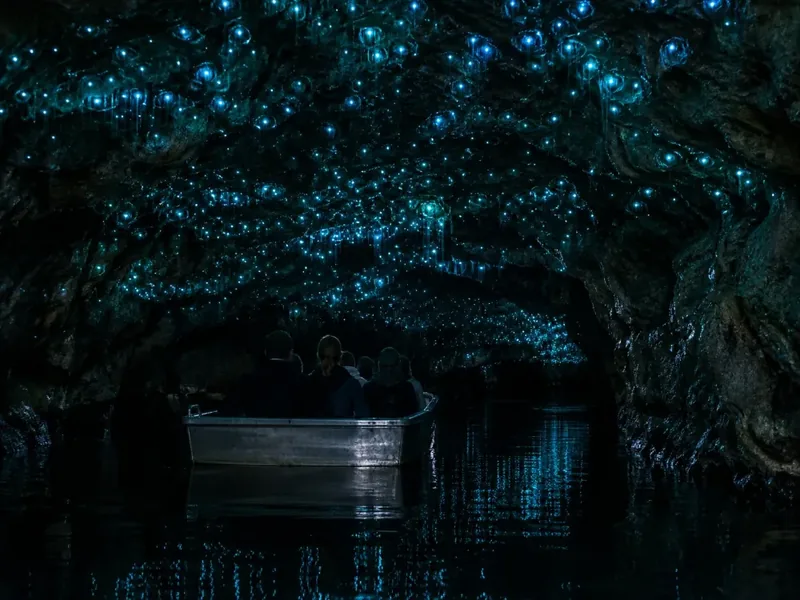
The glowworm grotto by small boat, in silence, with a guide. About 2 h 15 min from Te Anau.
Explore the glowworm caves tour Tour detailsDo glowworms bite?
Not people. The larvae catch tiny insects in sticky threads, and the adult flies have no working mouth and can't eat at all.
A glowworm larva is 3 to 4 cm long when fully grown and feeds mostly on small midges and other flying insects caught in its snares (Te Ara). Its mouthparts are for reeling in and eating prey, not for anything as large as you. Larvae do eat each other when food is short, and the adult flies end up in the threads too.
The adults live 2 to 5 days, long enough to mate and for the female to lay her eggs. They are harmless. The insects that do bite in Fiordland are sandflies, so bring repellent for the jetty.
How rare is it to see a glowworm?
Not rare in New Zealand. They live throughout the country wherever it is dark, damp and still: caves, tunnels and stream banks in the bush.
What is rare is the right conditions. Forest glowworms cluster on moist banks beside streams and in ravines, out of the wind (Te Ara). You need full darkness, no torch and a few minutes for your eyes to adjust. Many visitors walk straight past a glowing bank because they kept their headlamp on.
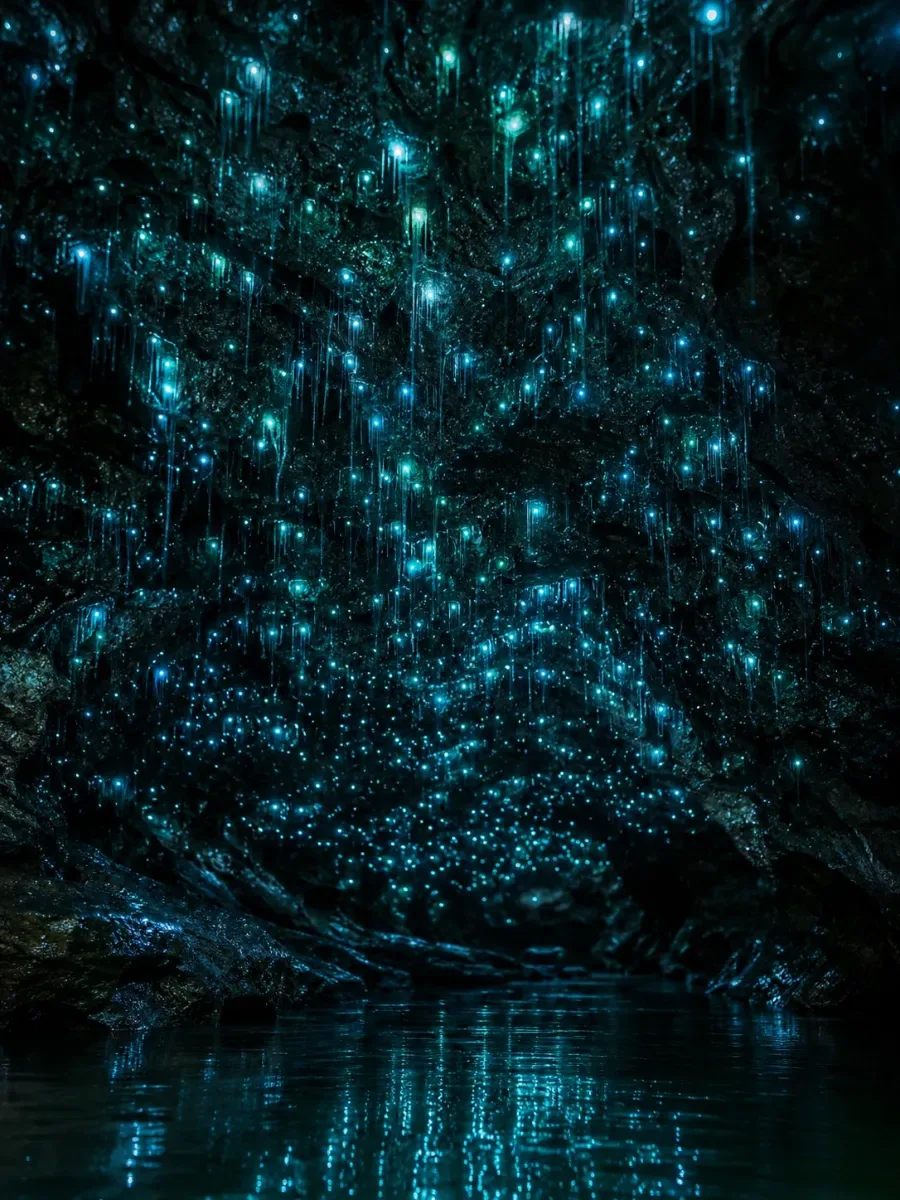
Dense displays, the kind that look like a night sky, are mostly in caves, where there is no wind and food comes in on the stream. That is why tours exist. For free roadside and forest spots, see free glowworms in New Zealand.
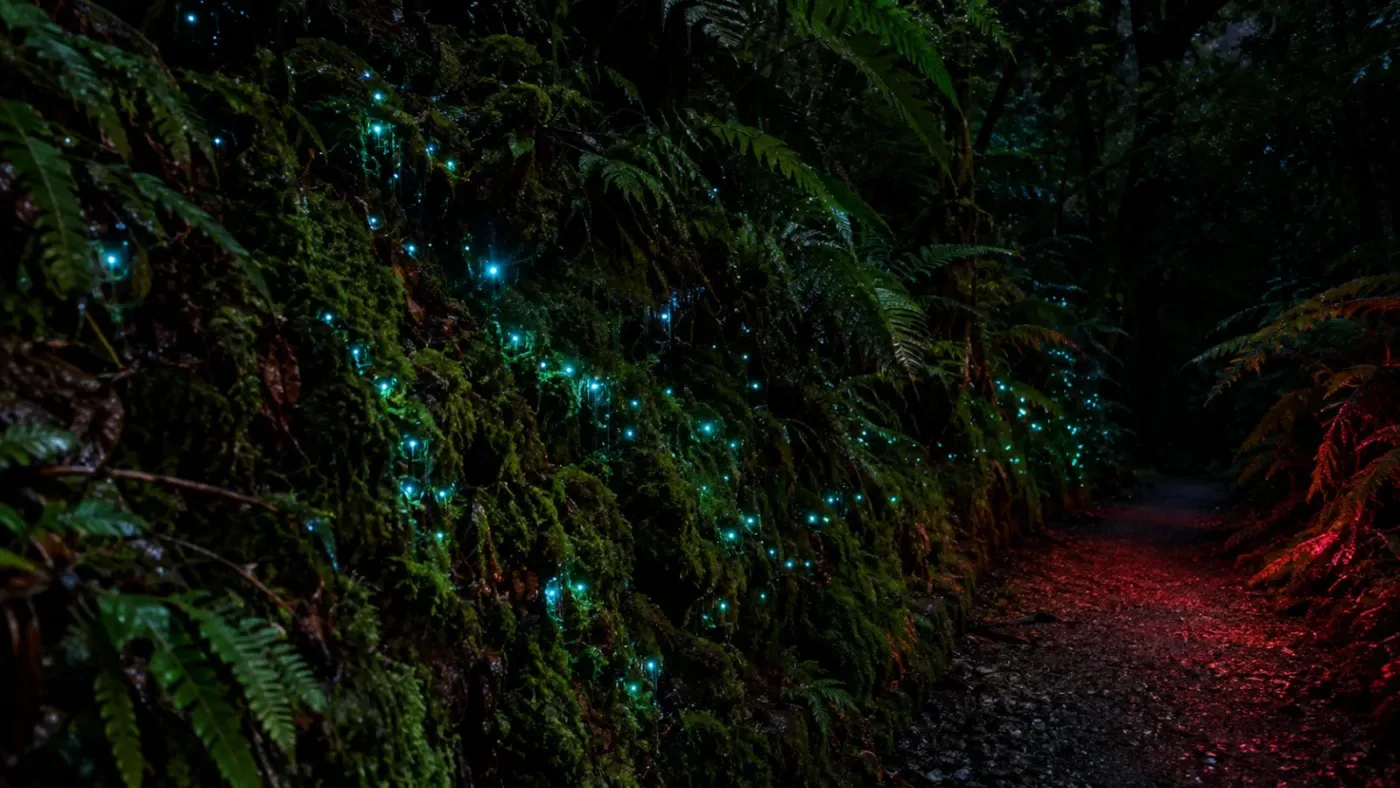
Want the cave version, with hundreds of thousands of lights? The Te Anau tour runs every day of the year.
Check dates for the glowworm caves tourWhat time of year are glow worms active?
All year. In caves they glow day and night in every season. Outdoors they start shortly after dark. Claims about one peak month disagree with each other.
Te Ara and Tourism New Zealand both say cave glowworms shine at any hour and forest ones from shortly after dark (newzealand.com). Some sources claim a summer peak, when there are more insects to eat. RealNZ's own blog calls December to February peak season, which is about crowds, and also says June and July are especially active. We found no official study that ranks months.
The safe line: you will see glowworms on any Te Anau departure, at any time of year. The display can vary with food supply and water levels.
When is the best time to see glow worms in New Zealand?
Any time in a cave. Outdoors, go on a dark night after full dark, which means late in summer and early in winter.
In Fiordland's summer the sky doesn't darken until well after 9:30pm; in winter it is dark by about 5pm (Fiordland RTO). That makes winter evenings easier for a forest walk, and makes the cave tour the reliable option in summer. Damp, still nights are best outdoors: glowworms need moisture and little or no wind (DOC).
| Stage | How long | Glows? |
|---|---|---|
| Egg | About 3 weeks (10 to 24 days by source) | No |
| Larva | 6 to 11 months, growing to 3 to 4 cm | Yes, brightest |
| Pupa | About 2 weeks, hanging from a thread | Faintly |
| Adult fly | 2 to 5 days; no mouth, can't feed | Faintly |
Life-cycle figures from Te Ara and the Science Learning Hub.
Frequently asked questions
How many glowworms are in the Te Anau caves?
RealNZ says hundreds of thousands. Nobody publishes a precise count.
Why do you have to be silent in the glowworm grotto?
Guides ask for silence so the group can take in the grotto, and because noise and light are kept to a minimum near the glowworms. Phones stay off for the same reason.
Are glowworms found in Australia?
The genus is: eight Arachnocampa species live in Australia. The New Zealand species, A. luminosa, lives only in New Zealand.
Can you photograph glowworms?
Not in the Te Anau cave, where photos and video are banned. On free forest walks, a tripod and a long exposure work, without flash.
Ready to book
Choose your trip
Free cancellation up to 24 hours before on every option. Prices are from-prices in USD and move with the season.
Te Anau Glowworm Caves Guided Tour
- Return catamaran cruise across Lake Te Anau
- Guided walk through the limestone cave
- Small-boat ride into the glowworm grotto